Showing posts with label ★★★★. Show all posts

Tuesday, 29 June 2021

My Thoughts on Raya and the Last Dragon


Disney have spent the last decade in uncharted territory. That seems like an odd thing to say about a company that can guarantee a billion with a half-hearted remake of an old favourite, and in that regard, there's nothing surprising about Disney's recent output, but if you look at the films themselves, it starts to get more interesting. Their last few animated efforts-Moana, Zootopia the Wreck-It Ralph duology- have all drawn inspiration from more varied sources than Disney have done before, and while the studio has never been a stranger to exploring different stories, they haven't had a streak so rich with both diversity and quality in decades.

To that end, Raya and the Last Dragon is a welcome addition to the lineup, an animated fantasy epic that, even from its opening minutes, distinguishes itself from some of Disney's more frivolous fare and harkens back to the darker curios in their catalogue, such as Atlantis: The Lost Empire and The Black Cauldron. The plot follows Raya, a noblewoman wandering the wasteland in search of the last surviving dragon and the key to uniting five nations that have been turned against each other by growing distrust. Trust- and the lack of it- is a key theme in Raya, and by anchoring the high concept to such a simple, universal idea, the film is able to hit a hot streak early on and keep it going

The best parts of Raya are the moments where the tried and true Disney formula rubs up against something slightly fresher and more exciting. It's undoubtedly an entry in the Disney Princess canon but it brings some new ingredients to the table to signal the direction that brand is moving in. The film leans firmly into the adventure genre and places greater focus on worldbuilding and character relations. It's slightly darker than previous entries, but the added seriousness really suits the feel of the story. At the same time, it still finds room for animal sidekicks and more than one plucky comic relief, but places them in a new context to mine them for renewed effect.

Again, it's because the story is built around such a simple idea that the film is able to spend more time on the details of the world. Every character is defined by trust, each one of the five nations defined by their role in an early film betrayal, and every emotional turning point stems from one of the players addressing their own biases in the face of a greater good. This extends to Raya too, whose internal defense mechanisms ultimately become the backbone of the film's conflict. Kelly Marie Tran brings our heroine to life with careful, measured deliveries, which is a perfect compliment to the ever reliable Awkwafina, who brings both levity and a surprising amount of weight to the role of Sisu, the titular last dragon

All things considered, it's another strong entry in a reliable catalogue. The more solemn tone might take some getting used to but for a younger audience it's the perfect gateway to similarly story-driven fantasy stories such as Samurai Jack or Magi: The Labyrinth of Magic. Either way, it's an interesting take on a brand that's not going anywhere anytime soon, and with gorgeous animation, smart worldbuilding and a charming cast of characters, it's a fairly successful 107 minutes

★ ★ ★ ★

Saturday, 26 June 2021

My Thoughts on A Quiet Place: Part II


The first Quiet Place came out of nowhere: an original blockbuster(!) helmed by Jim from The Office that delivered both thrills and heart, and managed to set up a sequel relatively organically. And though we've had to wait a while, it's finally arrived, so let's get into it. Before we begin, this is a spoiler-free zone, so don't worry about having any of the monster-fleeing goodness ruined for you here. Now, shall we?

Opening with a flashback, AQP2 threatens its audience with an unspeakable horror: over-explanation. Thankfully, it's just a tone setter, providing some context to a story that begins almost where the first left off. It doesn't really serve the plot but it does give us the chance to reacquaint with these characters, the perfect reintroduction to ensure that our empathy with them hasn't waned in three years. From there, the plot splits into a search for help and a fight for survival, and it's to the film's huge benefit that it keeps things fairly simple. There's not much to either storyline, all the better for the thrills to resonate and hoo boy do they ever. Now that the "creatures that hunt by sound" premise has been broken in, the film is able to really hone in on the relentless, electric shocks, and right from the start, it manages to find a really confident flow.

 Because AQP2 hits such a confident rhythm early on, it's able to place so much more faith in the audience and avoid burdening them with an abundance of plot, which leaves more room for the shocks. From quick darts of terror to more sustained releases of tension, Krasinski is incredibly adept at juggling different but consistently effective methods of delivering thrills, and because he's unleashing them on a cast of characters that are largely known to the audience, he's able to ensure that the stakes are always felt. The plot takes a slight backseat but the film places a clear goal for one set of characters, before having fun exploring all the ways it can keep that just out of reach for them. As for the other main storyline, it largely functions as a way to keep the adrenaline flowing, but it's engaging enough, and gives us more time to admire the beautifully nasty creature designs, which is no bad thing. 

A lot of what this film does well (simple but electric tension, genuine affection for its characters, no-frills creature attacks) was also present in its predecessor, but what's interesting is what this second installment adds. For one, it gives fairly interesting insight into what the rest of mankind has been up to. No spoilers, but one dockside dalliance gives weight to the old speculative fiction metric that the need to survive blurs the line between man and monster.

And as long as we're talking about newcomers, there's also Cillian Murphy's Emmett. Much more than a mere Krasinski stand-in, he's the family's introduction to the world outside the farm, something that becomes all the more thrilling when he finds himself completely out of his depth. There's a small moment of sound design that signals his role in the story, where the film mirrors a moment between Emmett and Regan with an early gesture she shares with her father, and brilliant as it is, it sort of exists to be subverted as Regan proves herself to be more than capable of filling the role of protector. Millicent Simmonds again delivers the performance that defines the film, seamlessly becoming a figure of hope and cementing her status as an iconic figure in modern horror. She's also just a great protagonist, effortlessly guiding the audience through a narrative that's too taut for comfort.

And that's one of the film's only real issues. The tension is maximised and Krasinski chooses action over horror, and while there's nothing wrong with that, it does mean that the film can forget to let its plot sit with the audience and place all of its focus on getting to the next setpiece. This is something that the first film did while also giving itself room to breath, and although Part II plays as an effective rollercoaster of a film, and does everything it needs to do, it moves a little too quickly and ends a mite too suddenly to really deliver any sort of cohesive point to the story.

But as an exercise in stress and an excuse to check in on the most unfortunate family in the post-apocalypse, A Quiet Place: Part II more than delivers. It's got a habit of investing too heavily in thrills but after a year out of the cinema, that's hardly a bad thing. It's light on plot but doubles down on what made the first such a triumph, and in the process manages to provide a punchy, breathless 97 minutes. It's not quite as elegant or as impactful as the first but it does tap into a rush of pure adrenaline and twist that into a pretty engaging feature length chase. Does it have the legs to keep this franchise going? Maybe not, but in the here and now, it's a decent way to return to cinemas.

★ ★ ★ ★ 

Saturday, 17 April 2021

My Thoughts on Palm Springs


The last 13 months have been exhausting. Any film capturing the zeitgeist now will have to do so for an audience that is so hyper-aware of everything going on in the world and craving an escape over any sort of direct address of the world's morale. But what if a film could do both? Enter Palm Springs, a frothy, sunny rom-com that offers delightful refuge to burnt-out filmgoers, while also deftly exploring how draining it is to live the same day again and again. It took a while to arrive on these shores, but it floated onto Amazon Prime earlier this month after building up a hefty amount of buzz. But was it earned? Let's find out

The film is set over the course of a wedding taking place on November 9th, as sister of the bride Sarah meets laidback cynic Nyles. From the start, Cristin Milioti and Andy Samberg sell their chemistry, her ambiguous angst bouncing off of his relaxed world-weariness. It's all very meet-cute until she wakes up to find that it's November 9th again. And again. And again. If you're reading this and getting flashes of Punxsutawney, then it's to the great credit of writers Andy Siara and Max Barbakow that Palm Springs is able to find new ground in the time loop genre, and become its own small landmark in the process. It runs at a lean 90 minutes, and breezy as its pacing is, it never stops the film from charging head-first at a Groundhog-style plot beat before ducking and rolling into uncharted territory. It's not that the story points themselves are new- the film is a respectable mix of rom-com tropes, sci-fi concepts and broader gags- but the way Palm Springs arranges them does feels distinct, and is massively exciting as a result

Part of this comes from the duality of it all. Sarah and Nyles provide two entirely different perspectives on the concept, and watching how their experiences of the loop overlap and contrast and deepen their relationship is what forms the backbone of the film's charm. It keeps its more intricate plot beats stewing under the gags for most of its run, tiding the audience over with sharp lines ("You're cheating on me, ya goof") before blindsiding them with smart storytelling and genuinely poignant character turns. Without spoiling anything, the way the film explores Nyles' deep-seated cynicism is the ace up Palm Springs' sleeve. The growing apathy under his cool demeanor is bound to resonate with anyone who has found this past year especially draining, and although the film was completed and premiered before the pandemic started, the timing of its release feels on-point for that very reason

Palm Springs is a salve. It frames love as a cure for gnawing indifference without ever sacrificing its hilarious gags, surprisingly intelligent plot twists and deep reservoirs of charm. It's another triumph for producers The Lonely Island and a massive calling card for the bafflingly underrated Cristin Milioti. It's a delight, smart and fun enough to serve different purposes for different audiences. It nails an incredibly tricky balancing act as the rare crowd-pleaser that swings for the fences and absolutely delivers. It makes a passionate argument that just because a film is fun doesn't mean it should skimp on the substance. And folks, that's something that everyone could use right now

 ★ ★ ★ ★ 

Monday, 22 March 2021

My Thoughts on Jumbo


Cinema is full of unlikely love stories, from Harold and Maude's sixty year age gap to Lars and the Real Girl's touching tale of one man's love for his life-size sex doll. Jumbo proudly joins this lineup as a real curio of the festival circuit, as the always amazing Noémie Merlant falls for a handsome stranger at a funfair. The stranger in question? A 20-foot tall pendulum ride called Jumbo. And yet, in the hands of director Zoé Wittrock, this proves to be the start of a beautiful relationship. Right off the bat, Jumbo is working with a bizarre premise, one that will turn a lot of people off but will also attract the kind of film fan who lives for the weird and the wonderful, who gleefully explores the annals of cult cinema in search of the wildest films they can find. If you fit that description, then read on, because Jumbo is very much the film for you. Just maybe not for the reasons you might think

Yes, Jumbo is an incredibly strange film with an attention grabbing premise, but that's not all it is. Actually, the whole point of the film is proving that just because something's weird, that doesn't mean it's not genuine. All the same, if you're coming to Jumbo solely out of curiosity, or even if you just want something different, you won't be disappointed. Wittrock's approach to the relationship is so admirable in how committed it is to taking this story seriously. There's a sex scene between Merlant's Jeanne and the titular ride, and without spoiling it, it's the thematic centerpiece of the film for all the right reasons. Jumbo is attention-grabbing and hypnotically weird, but it never makes a spectacle of its central relationship. The film actively rejects any sort of voyeurism or judgement. It's not an ironic film at all, instead relishing in the sincerity of an unorthodox romance that's no less genuine

It's a must-watch for fans of strange cinema, not because it's so surreal, but because it's explicitly about how it feels to love something even when nobody else can understand it. The film isn't a strange love story, but a story about strange love, and takes glee in sticking two fingers up at the powers that be and celebrating its heroine's passion for fairground rides. By the end, it marks itself as an unlikely feelgood hit, with real joy and love and heart. It's an oddity for sure but if you make it to the end, the film makes it very clear that it understands passion, even when it's targeted at something incredibly niche. Jumbo is a surprisingly wonderful film that takes its odd premise and spins it into something truly wonderful, and when it's done, you'll immediately want to rejoin the queue and get ready to ride all over again 

★ ★ ★ ★

Tuesday, 29 September 2020

My Thoughts on #Alive


The first 30 minutes of #Alive may seem too soon for some. A rapidly spreading infection, a city on lockdown, and people advised to stay inside to stay safe, it feels worryingly prescient for something that was filmed almost a whole year ago. Director Cho Il-hyung actually adapted the script from #Alone, an upcoming zombie film written by Matt Naylor. Safe to say it’s a film born of curious circumstances then, but #Alive bears a relevance that goes deeper than just mirroring current events.

The film follows Oh Joon-woo (Yoo Ah-in), a livestreamer trapped in his apartment during a zombie outbreak. And for the first 40 minutes, we just watch him survive, desperately trying to conserve his resources while avoiding succumbing to total insanity. Eventually, he realises that he’s alone and completely done for. Except he isn’t. This is where Kim Yoo-bin comes in. Wonderfully played by Park Shin-hye, she reveals herself to be another survivor, and the two forge a bond that becomes the heart of the film. Given that it has a relatively simple premise, the real joy of #Alive is watching as the two unfortunate heroes come to terms with their circumstances and overcome the challenges that face them together.

What’s impressive about the film is that, despite the modest runtime and snappy pace, the central relationship develops in a way that’s satisfying and organic. It’s easy to care for both of these characters, and one key bonding session employs a delightful use of split-screen, one of the best in recent memory. The storytelling is efficient but Cho takes care to never sacrifice the heart. Again, both Joon-woo and Yoo-bin are easy characters to love, and it’s here where the simplicity of the film’s style becomes invaluable; you want to see them survive because they want to survive themselves.

This adamant belief in the power of human survival is what make #Alive one of the most affirming films of the year, with characters who stay alive and fight the odds just because they want to keep going. What’s especially wonderful is seeing that positivity extend to the film’s use of technology. Where the majority of tech-centric horrors use the genre to highlight the ills of the modern world, #Alive does the opposite. Here, phones, drones and social media aren’t the problem- they’re pathways to the solution. The odds are so titanic that they never feel overly convenient, either, making things easier without giving the heroes an easy out. Speaking of, the ending should feel too neat but in Cho’s capable hands, it just doesn’t, using the title to fist-pumping effect. In such uncertain times, #Alive might just be the film we need.


★ ★ ★ ★

Wednesday, 16 September 2020

My Thoughts on I'm Thinking of Ending Things

 Charlie Kaufman Aches for More Time In I'm Thinking of Ending Things | Film  Review | Consequence of Sound

Charlie Kaufman is back with I'm Thinking of Ending Things, a psychological horror charting a doomed relationship, and an adaptation of Ian Reid's 2016 novel . It follows Jessie Buckley as a young woman who's Thinking of Ending Things with Jake (Jesse Plemons), her pleasant, if slightly eccentric boyfriend. That she's considering this en route to his parents' house before she meets them for the first time is just the start of what promises to be a long, strange night. A new Kaufman project is always cause for celebration, not just because of their scarcity, but because every script he pens (in this case for the screen) is its own kind of puzzle box, every detail simultaneously elusive and yet impossible to resist interrogating.

It goes without saying that this film won't work for everyone, especially as it delves further and further into the surreal. The truth is that it's psychological horror at its most literal, which is to say it's a film about the terror of human consciousness. Kaufman substitutes shocks and scares for contradictions and inconsistencies, forcing the viewer to doubt every detail that the film makes a point of establishing. Again, it's bound to weed out the impatient, but part of this film's charm is that steadily building discomfort, difficult to watch but much harder not to. This is made even better by the film's queasy sense of humour, which is so paralyzingly unfunny that it makes every moment that much harder to bear. 

It's hardly a stretch for Kaufman stylistically or thematically, but that's not necessarily a bad thing. Every film he makes feels like he's tunneling further into his own psyche; Eternal Sunshine dissected an imploding relationship and Anomalisa portrayed a character lost in the fog of their own waning grip on reality, but I'm Thinking of Ending Things feels like the point in his filmography where all of his pet themes are starting to blend into one gorgeously bleak idea. He's doubling down on the things that make him such a unique storyteller, and if the result is hard to understand then I think that's kind of the point. Suggesting that any of these images or ideas has any one meaning just doesn't feel right, and yet they're done with so much nuance that two people could argue for days about any of them (the pig, the dog, the ice-cream) and both of them could be correct on some level. It's a film that invites discussion and dissection and it's likely that, in years to come, we'll still be arguing about what any of the symbolism means.

In fact, if I had one reservation with I'm Thinking of Ending Things, it's that Kaufman goes too abstract on the home stretch. No spoilers, but the last 30 minutes sees a change in the story's focal point, so that instead of being about one character, it really turns out to have been exploring someone else the whole time. The issue is that, in doing this, the film relies heavily on surreal imagery and dream logic, but with much less of a tether to reality as before. The probelm isn't that it doesn't make sense- that goes with the territory- but that it doesn't feel as narratively consistent with the film that preceded it. 

There's such a notable shift in direction without enough time to properly develop it or make it feel that it has any sort of bearing on everything that was set up so well. If anything, maybe it's too clever, going so deep into the psychological that it feels at odds with the slow, sustained build of tension from before. Maybe the best comparison would be Eraserhead, another film that ventures so far into the world of dreams that applying any sort of rational thought to it just feels futile.

But again, that's perhaps to be expected from one of the most cerebral and challenging filmmakers working today. The beauty of I'm Thinking of Ending Things is in how abstract it is. It is frustrating, it is inconsistent and it doesn't need to make sense to get its point across. Maybe I'd have preferred the narrative inconsistencies and slowly escalating dread to continue through the entire runtime instead of a sudden, incredibly dense barrage of symbolism in the last ten minutes, but up to that point, I'm Thinking of Ending Things is by far one of the year's standouts. I'll admit, I loved the film but hated the experience of watching it, but that feels like the point. It's pure thought translated into cinema, and even if it trips up slightly in its home stretch, there's more than enough meaning packed into it to keep it from missing the mark. It's a really interesting piece of work that's at its best when it lets these long, often contradictory scenes of dialogue just play out, with a good part of the film's midsection being some of the most thrilling scenes of the year. I've only seen it once, and maybe I'd benefit from a revisit, but I can't help but feel that's intentional too, like the film burrows into your subconscious and grows with every subsequent rewatch. And if that's the case, I can't wait to see my thoughts develop over time

★ ★ ★ ★


Wednesday, 2 September 2020

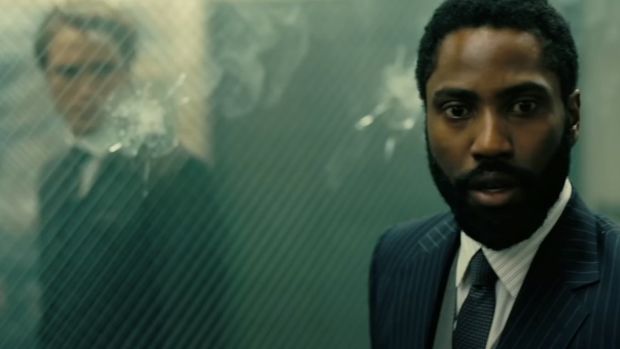
My Thoughts on Tenet

 Tenet review: Is Christopher Nolan's film good enough to save cinema from  Covid-19?


The first major theatrical blockbuster in a post-Covid world, it's only natural that all eyes are on Tenet. A new Nolan release is guaranteed to attract serious heat anyway, but the director's staunch refusal to delay the film's release date has turned it into the cinematic talking point of the year. And while its temporal musings have proven divisive, it's quite possible that this could be Nolan's most ambitious project yet, conceptually but especially release-wise. So the question is this: is Tenet the film to get big-screen releases back on track?

Essentially following The Protagonist (an on-point John David Washington), a CIA agent sent on a mission to prevent WW3, Tenet is broadly a spy film, albeit one intricately infused with Nolan's knack for time-centric cinema. The film is firmly rooted in its action, which is undoubtedly its greatest strength. The setpieces benefit from the combination of forward flowing and inverted time, and it's a joy to see previously introduced ideas take on new meaning as the plot progresses. One central car chase that's nail-biting gold on first pass gains a greater level of resonance upon repetition, a spoiler-free example of a narrative device that becomes more and more impactful every time it's used. And while the reversed time aspect may sound confusing when explained in the first act's seemingly endless exposition, it's surprisingly elegant in practice, proof that the real strength of Tenet's storytelling is in its visuals

See, the plot of Tenet isn't actually all that complicated, and unlike other Nolan fare such as Interstellar or Memento, it lacks an emotional core for the high concept to hinge itself on. Thankfully, this isn't necessarily a bad thing, with the film playing out as a breakneck ballet moving in two different directions at once and excelling as a piece of action storytelling rather than any sort of interrogation of the human experience. That said, the juxtaposition of the relatively basic story and the complex concept does mean that Tenet comes up a little light in terms of substance, an issue not helped by the constant stream of exposition, made worse by the film's sound design, where a good chunk of the dialogue ends up being just about unintelligible. The sound brings another issue with it too: This film is LOUD. I won't go so far as to label the sound mixing unfinished, but it is uneven, and the experience of the film loses a fair bit because of it

But as a piece of blockbuster cinema, Tenet is as good as anything we've gotten in the past year, expertly marrying a high-concept with Nolan's reliably strong ability to craft IMAX-worthy spectacle. Basic as the plot may be, its individual components end up being more than the sum of their parts. Kenneth Branagh's menacing Russian baddie, for instance, seems like a caricature on paper but ends up giving the film's conflict real weight and immediacy- not just something for the heroes to fight, but something to fight against: a human manifestation of a bigger idea that makes unlikely victory seem possible because it's suddenly become human. The same is true of Elizabeth Debicki and her gangster's moll, who undeniably suffers from Nolan's chronic inability to write a convincing female character but ends up softening the film's cold, objective edge, ultimately allowing the conclusion to resonate, adding satisfaction and weight to what might otherwise have been purely emotionless and functional

Ultimately, Tenet just about meets its lofty ambitions, a heady, large-scale blockbuster that warrants rewatches backwards and forwards. It's clear Nolan has a lot on his mind, with this film feeling like an extension of a man who's been vocal about his concern for the future. What it lacks in its narrative and loses with its chaotic sound design it easily makes back with intricate, well-crafted action and a satisfying eternal logic. And while it doesn't reach the heady heights of Dunkirk or the Dark Knight trilogy, it does mark a triumphant return for both cinema's most fastidious intellectual and the screens he yearns to pour his dreams onto. And you really can't ask for more than that


★ ★ ★ ★

Saturday, 14 March 2020

My Thoughts on The Invisible Man


Universal's Dark Universe was one of the most disappointing IP launches in recent memory, floundering right out of the gate with the unanimously shat-on disaster that was The Mummy. In many ways, it was a bold decision to continue with the classic monster reboots, although reframing them as self-contained stories was undoubtedly a clever move. Helmed by Upgrade's Leigh Whannell, The Invisible Man has the unenviable task of following up the one of the Cruiser's darkest hours, and that's something that it absolutely achieves. Like many Blumhouse productions, this is a film that takes studio horror and shows us what it can be, refusing to rely on lazy jumpscares and generic setups to make an easy profit. This is one of the strongest high profile horrors in years, which isn't bad when you factor in its $7 million dollar budget. Of course it helps that, like every good horror, it's actually about something, this time using the idea of the invisible man to tell the story of a toxic relationship, with Elisabeth Moss' Cecelia desperately trying to fend off her apparently dead, suddenly invisible abusive boyfriend, tech mogul Adrien Griffin

This turns out to be a great move on Whannell's part, as he mines horror from gaslighting, emotional torment and the frustrations of not being believed, and the result is something that's genuinely scary. It also takes cues from the psychological thriller, building an atmosphere of unsettling uncertainty and knowing when to puncture it with a well placed shock. Surprise is a key motif in this film, and part of its freshness comes in its unpredictability; although plot points are well telegraphed, the film excels at presenting them in a way that not only feels sudden, but also possesses an element of genuine danger. The threat always feels real in The Invisible Man, and that's down to the film's fusion of the recognisable and the alien: the grim feeling of knowing what's coming but never quite being able to stop it, or even predict how it plays out. Points to Whannell for refusing to ever show the audience the central relationship in a positive light as well. Not once is there a montage of fond memories, or even an implication that it was ever anything but toxic, and it's Whannell's refusal to rely on that kind of cheap storytelling ploy that lets him imbue the horror with so much weight.

There are genuinely shocking moments in this film (a central restaurant setpiece will surely gain notoriety), but it's the sustained sense of tension that makes each of them resonate, something only amplified by the less-is-more sensibilities that Whannell demonstrated in Upgrade. Of course, none of this means anything without an equally strong central performance, and Elisabeth Moss absolutely delivers on that front. She's the best she's ever been here, bringing so much intensity and vulnerability without ever defining Cecelia as just a victim. There is so much empathy in this performance, but it's also so visceral, taking the bone-deep horror at the centre of the story and drawing it to the surface, with a physicality that convinces even when she's acting against the air. She is the crucial ingredient in what makes this film work, the anchor that convinces even when the high-concept threatens to slide towards silliness. Her commanding presence also negates the film's only real issue, which is the breakneck pace the plot progresses at, often feeling like Whannell is forcing the plot to a conclusion. It's never a major issue, but it does feel like everything is compressed pure information, despite its considerably roomy two hour runtime, and the film feels like it's moving at a sprinter's pace for most of its run. Again, it's only a slight distraction, but the sheer concentration of information can get slightly exhausting, even if it is only noticeable when the thrills slow down

Thankfully, that's a seldom occurrence in The Invisible Man, a film that takes every opportunity to deliver a surprise and ensures that each one resonates. It's a deft reinvention of the Universal Monster film after the disappointment of The Mummy, and is proof positive that these stories can lend themselves to modernisation in the right hands. The horror feels thrillingly prescient, reframing the terror of an invisible threat in a way that is utterly unpredictable but all too familiar. Elisabeth Moss is every inch the perfect horror hero, delivering arguably her best performance ever, and it's her fearless embodiment of this character that gives this film such a sting. She makes this her own, and she easily joins the pantheon of the ace female horror leads we've seen in the last few years. It's slick, it's thrilling, it's got some really sharp ideas that linger after the credits roll, and it's tonally tight. I'll admit that I wasn't expecting much of The Invisible Man, but I'm happy to say that I was very much surprised

★ ★ ★ ★

Tuesday, 10 March 2020

My Thoughts on About Endlessness


Roy Andersson is back. After wrapping up his Living trilogy back in 2014 with the wonderful A Pigeon Sat on a Branch Reflecting on Existence, cinema's most singular surrealist has returned with About Endlessness, 78 minutes of his trademark philosophical comedy delivered in a series of shorts exploring the silliness, horror, tragedy and beauty of being a human being. About Endlessness is business as usual for the mischievous filmmaker, and it should go with saying that it won't make converts out of those who aren't already devout members of the church of Andersson, but it's a short, sharp shot of arthouse bliss, lacking a definite plot but packing plenty of gorgeously dry insights about the oddities of the everyday

The shorts explore the mundanities of existence; in many ways the title is the best indicator of what the film is about (endlessness, natch). Each one is rendered in Andersson's signature style: minimal camera movement, drab colour palette and a hyper-specific focus on the bizarre, but they're also playful, surprising and full of mischief, spryly bouncing along from one observation to the next with deadpan glee. Each short focuses on the vastness of existence, the emptiness of the void and what we choose to fill it with, and although stylistically the film is very much rooted in Andersson's classic tightness and austerity, there's a great amount of tonal fluidity in this film, which can pinball between a pitch-black depiction of an execution by firing squad to a spirited musical number with absolute ease. Andersson effortlessly flits between tones as he flicks through this gorgeously constructed picture book, but it's the images themselves that really resonate. The tableaux range from the blacker-than-black comedy wrung from a nightmarish crucifixion to the unfathomable beauty of a couple floating above a destroyed city, but even the seemingly minor images hold weight; my personal favourite being the hilariously unfortunate shot of a father tying his daughter's shoes in the midst of a monsoon, although special mention goes to the utterly unexpected appearance of one of the 20th century's most evil tyrants

The prevailing themes of About Endlessness are all classic Andersson, reducing the most bizarrely relatable moments of the human experience down to their most crucial elements, and the power of these vignettes echoes across the whole film. It is simultaneously powerful and ridiculous, but the greatest surprise is how it confronts the issue of faith. This is explicitly a film about the great forces of the universe and the extent to which we believe in them, but for all of his gleeful pranks, this is something that Andersson tackles with great contemplation. It's not so much that he knows when to laugh and when to stop laughing, but that he knows how to poke fun at the grander parts of the universe while still understanding their importance. Most importantly is that it isn't navel gazing nonsense: when he says something here, there is truth to it, and the final observation, in which one character openly remarks on the wonders of the universe, really does hit home even when it should feel preachy. The film very much sees Andersson work within his niche but again he proves why he carved it in the first place, showcasing just how well he's able to work out of it to deliver a true experience in the way that only he can

 How much of it works does of course depend on the person, but Andersson's sheer devotion to the offbeat is absolutely undeniable. It's early days yet, but it's fairly unlikely that About Endlessness will be usurped as the strangest film of 2020.
★ ★ ★ ★

Saturday, 7 March 2020

My Thoughts on True History of the Kelly Gang


2016's Assassin's Creed was a rare misfire for Justin Kurzel, one of the true punks of modern genre cinema, which is unfortunate considering the brutality of 2011's Snowtown and the blazing reinterpretation of 2015's Macbeth. So it's exciting to see him back on form with True History of the Kelly Gang, a fiery reframing of the life of the outlaw Ned Kelly. This isn't the first film to tackle this story, with Kelly having been played by everyone from Heath Ledger to Mick Jagger, but it's certainly the most striking. Kurzel's take on Kelly is entirely from his perspective, following his life in three crucial stages. It also completely tears up the rulebook, telling Kelly's story the way he probably would have done so, a fitting move considering how vital the idea of making your own legacy is to the story

True History of the Kelly Gang is pure punk poetry, revelling in the anarchic bliss of Kelly's antics and finding haunting beauty amid the chaos. It's a hardcore film, with jolts of unrelenting violence and disarming moments of black comedy peppered throughout the film. These stylistic choices bring their own kind of brilliance, with bombastic punk music and blinding strobe lighting amplifying the soul searing fire at the heart of the story. This is cinema of the elements, drawing its bite from the stark natural imagery to propulsive effect, and the result is Werner Herzog by way of Pete Shelley, both anarchic and awe-inspiring on its journey through the inferno. True, this particular blend won't be to everyone's taste, but the fusion of arthouse and genre sensibilities is undeniably hypnotising, with Kurzel using that stinging bite to cut through to something pure and powerful. Throughout the film, Kurzel is musing on the act of telling history, using the Kelly story to meditate on the extent to which we get to choose how the world remembers us. What gives this film so much strength is that it doesn't feel like it's being told in retrospect; less of a chronicle of the past and more the story of a life told by the person living it.

The bloody, brutal brilliance is propelled by George McKay's beguiling turn as Kelly: unflinching, intense and physical, but with a deep lying vulnerability that makes his gradual destruction that much more tragic. McKay transforms the punk poetry into flesh, blood and muscle, supercharging every side of Kelly with pure electricity. His Kelly is an outlaw and a storyteller, a killer and a poet, and it's McKay's refusal to play the role in any one way that gives it so much blistering brilliance. This mesmeric lead performance is bolstered by a stunning supporting cast. Russell Crowe spits salty verse with a surprising sense of humour, while Nicolas Hoult is disarmingly brilliant as a leering constable, but it's Essie Davis who stands out as Kelly's mother, all fire and ferocity with a deep reservoir of love at the centre. Special mention also to first timer Orlando Schwerdt as young Ned Kelly, who smashes youthful naivety and blistering bravado together with unnerving ease

Kurzel's film is an act of cinematic alchemy, a fusion of elements from all across the spectrum that finds harmony in chaos. It brings together colonial horror, eloquent punk, haunting natural beauty and grindhouse pulp to make something truly special. This is Kurzel cementing himself as one of modern cinema's craftiest madmen, bringing together so many things that shouldn't work, yet absolutely do. It's as provoking as it is highly entertaining; a shocking take on the Ned Kelly story that rewrites the rules and delivers something that feels truly singular. It's familiar pop culture building blocks stacked in a way that feels fresh, pure punk bliss that reminds us that history always matters, even when the way it's told is as radical and irresponsible as this. It's also just a wildly fun time, revelling in the excitement of the Kelly gang's exploits without ever glamorising them. True History of the Kelly Gang is white hot brilliance, an undoubtedly niche but highly enjoyable treat that rings with the unmistakable tone of both poetry and entertainment
★ ★ ★ ★ 

Thursday, 5 March 2020

My Thoughts on Weathering With You

After taking the world by storm with the magical Your Name, Makoto Shinkai is back with Weathering For You, another enchanting anime fantasy that looks absolutely gorgeous. Where Your Name dealt with bodyswapping, Weathering With You follows a young boy escaping to Tokyo, where he meets a girl with the ability to stop rain. Given that the city is experiencing non-stop storms, it seems only right that they use this power to help people who need good weather for various different events. From there, we see their day-to-day as they go from one job to the next, but the film always leaves crucial questions about the girl and her powers hanging over the story that suggest that maybe not everything is as it seems. To answer them here would of course rob the film of most its power, as well as ruin a viewing experience that's best had cold

Given that this is a Shinkai production, it should go without saying that Weathering With You looks absolutely stunning. The animation is gorgeous, revelling in reflective puddles and mouth-wateringly drawn food. No detail is left out here, with even the smallest crystal decoration hanging in a window absolutely shimmering off the screen. Pair that with a Radwimps score that is by turns haunting and awe-inspiring and you have a true treat for the senses, but what's crucial here is that Shinkai doesn't skimp on a satisfying story in his pursuit of screensaver-worthy imagery. It looks the part, but every frame is made all the more beautiful because the film is utterly overflowing with heart and charm. There's so much love in this story, both in the quietly moving moments of dialogue and the absolutely huge sequences of weather manipulation. By putting equal amounts of passion into the big and small, Shinkai is doing something really wonderful: bouncing deeply affecting moments of humanity off of the massive forces of the universe, and it's in this balance where the film transcends, even just for fleeting moments, and delivers some of the most stirring animation of the last ten years

If all the talk of the huge forces of the universe and the deep emotion of the heart sounds heavy, then it really should be emphasised how casual and breezy Weathering With You is for most of its run. The slice of life stuff is incredibly endearing, and each character is impossibly likeable, and following them in their day-to-day lives becomes an absolute treat. It's incredibly sweet and surprisingly hilarious, and even when there's not much happening, just spending two hours in this world feels like a privelege. This is helped by how short the scenes are, a potentially minor detail that means that Shinkai can fit that much more into the runtime. This structure of brief episodes makes it feel like so much is happening so quickly, which makes every moment feel all the more precious. The only drawback to such a perfect portrait of the everyday is that the film continually lets itself down when it leans into its thriller elements. True, the detective plot is needed as a catalyst for the dramatic climax, but with such an adept grasp on both the ordinary and the fantastical, the film doesn't really need any more. These scenes jar because they're forcing things to happen, taking something that excels when it just exists and pushing it to be something it isn't. And while this isn't enough to ruin the film, it does mean that it hits a snag as it goes into the third act, which is thankfully made up for with a gorgeous ending

The ending particularly reminded me of why I fell for this film in the first two acts: the optimism of it all. There's no denying- at least not in a logical way- that climate change is one of the most troubling issues right now, but Weathering With You faces climatic concerns with a reassuring smile. Shinkai literally ties weather to the drama of the story, but just as he promises that the lives of these characters will work out okay, so too can we face a meteorologically uncertain future. This is the exact kind of story we need about this right now, and the gorgeous animation, loveable cast of characters and heartfelt coming of age story are just the sweetest bonus. True, it doesn't offer any especially cutting insights on climate change, but that's not what it's trying to do. Instead, it provides a powerful tribute to the endlessly supportive act of just being there for the people we love that dispenses similar positivity when the future looks bleak. Shinkai has rendered every detail in Weathering With You with so much love, and the result is a true animated tonic that chimes with his uniquely soulful tune

★ ★ ★ ★