Friday, 2 October 2020

Top 100 Films of the 21st Century (Four-Year Anniversary Special): Part 4 (70-61)

 70. Get Out (2017- Jordan Peele)


In which "that guy from Key and Peele" became a master of horror. Jordan Peele's portraits of a uniquely American hell are both wonderful, though his first cut is inevitably the deepest. Get Out is a masterpiece in misdirection, where uneasy racial tensions surface in unexpected ways. Released at the start of the Trump administration, Get Out was an act of unquiet resistance, a politically charged scream at a world rapidly going to shit. And yet what Peele takes aim at isn't the overt bigotry lurking inside the White House, but a more insidious threat altogether; eviscerating the virtue signaling white folks who really want you to know that they would have voted for Obama a third time if they could. Existing alongside the gorgeously intelligent political horror were roller-coaster thrills and sharp, sharp laughs. It's hard to remember another debut that so confidently announces that it's director is here, and I hope he sticks around for a long time yet

The High Point: The ending, where Peele punctures the Twilight Zone thrills with the very real threat of the police's attitude towards POC, before subverting it joyously

69. The Wolf of Wall Street (2013- Martin Scorsese)


You'd hardly call it an unexpected move, Martin Scorsese helming a lengthy biopic of an amoral man headed up by one of his go-to male leads, but something about The Wolf of Wall Street felt fresh, like he was tapping the same reservoir using different equipment. Funny thing is that he wasn't, just remixing and updating the hallmarks of his style for a new era. As evolutions go, it's an effective one, proof that Scorsese's not a master because his style is definitive of a specific period, but because of how quickly and comfortably he's able to adapt that style, spinning a raucous, often totally contradictory yarn that pinballs between satire and celebration, making 180 minutes feel like a tight 90 (all hail Thelma Schoonmaker). It's a film that contains multitudes, like the man it's capturing, or the only nation capable of producing him. It's a blast, a blend of white-hot, barnstorming performances and intricate components that work in total unison. Yep, he's still got it

The High Point: "I'm not leaving"

68. Kill List (2011- Ben Wheately)


Folk horror's been having a bit of a moment lately, what with Midsommar, The Witch and Apostle sowing 70s style dread in pastures new, but in 2011, Ben Wheately made a countryside cult shocker that was more than a tribute to wicker men and witchfinder generals: it was a genre definer unto itself. A cold, eerie thriller that mutates and warps into a terror lying at the end of a path of followed orders, Kill List is Wheately at his breathless, cine-savvy best. It's sparse and bare-bones on the surface but rewatches (if you can bear them) prove that this deceptively simple tale is actually caked with detail and rich with meaning. The most exciting thing about it though, is also possibly the most curious; despite the fact that it's an hour and a half of quality horror, it only really reveals itself as a masterpiece in the last 20 seconds, where the entire film is horrifically re-contextualised in the nastiest, most disorienting way possible. It's as dark as cinema gets, but it's equally exciting

The High Point: The ending. If you know, you know

67. Almost Famous (2000- Cameron Crowe)


Media journalism is tough and thankless, with genuine zest and passion clashing with fragile egos and uneasy peeks behind the curtain. And yet Almost Famous finds a magic- nay, a romance- in it, a piece of woozy road poetry that just doesn't really seem to age. And while it's easy to scoff at Cameron Crowe and pretty much everything he's done since, there's an irresistible charm to his heartfelt ballad of big tunes and bigger personalities. It's a film that captures a moment while temporarily getting captured itself, absorbing the sights, smells and crucially sounds of early 70s rock-n'-roll as Patrick Fugit's fresh-faced journo followed Stillwater (the greatest fictional band of all time). It's hangout cinema at its best, leaving each rewatch feeling like a long overdue meeting with old friends

The High Point: Hold me closer tiny daaaaaaaancer

66. We Need to Talk About Kevin (2011- Lynne Ramsay)


I don't think any filmmaker embodies the phrase "quality over quantity" better than Lynne Ramsay. She's only made three (frustratingly spread-out) films since 2000, yet each one feels like a deeper stab into the dark heart of man. And yet, there's something so lingeringly awful about her third (and best) film, a not-quite-horror fable of a mother struggling to love her psychotic(?) son. It's got arguments about nature vs. nurture aplenty, but the real highlight is the performances: on one side of the struggle is a put-upon, possibly unstable Tilda Swinton, on the other a never-better Ezra Miller, who always feels like they're holding back an unstoppable tempest of darkness. It's a bleak interrogation of parenthood, that quintessentially human horror founded on misguided love and thankless responsibility. It makes us unhappy, and it makes us uncomfortable because complacency is a breeding ground for evil, regardless of whether it's born or bred. 

The High Point: "Why would I not understand the context? I am the context" 
 
65. Stories We Tell (2012- Sarah Polley)


 Documentary is interrogation by design, but what happens when the camera faces the other way? There's been a lot of great documentaries that seek to explore the unseen sides of a wealth of subjects and ideas- many of them this century (Farenheit 9/11, Searching For Sugarman, Hail Satan?, Capturing the Friedmans, Super Size Me, Blackfish, etc.)- but Stories We Tell is that rare thing, a non-fiction film that solely aims to acquaint you with its creator. Essentially, Sarah Polley and her family tell stories, and that's kind of it. Gradually, decades-old family secrets unearth themselves and the truth comes to light in all of it's ugly, love-filled glory, but the real thrill of Stories We Tell is how familiar it all feels. Polley invites us not just into her life, but herself- the past and present, the uneasy future and the intimate rhythms of her and those closest to her. At times it feels too personal, irresponsibly so, and when she finally ruminates on why she did this in the first place, you're right there with her, looking back at the last hour like some sort of raw, naked confession

The High Point: Hard to pinpoint one, but Polley's father recounting his wife's death is devastating

64. You, the Living (2007- Roy Andersson)


It's funny, but Roy Andersson might just be the saviour we need right now. You, the Living, the second installment of his Living trilogy, is a symphony made of a madness that comes from tedium. The episodes are unrelated but packed with carefully composed chaos, each one crawling behind the one before it like a funeral march of human sanity. Andersson's world is grey, empty and hopeless, totally void of comedy.... which is exactly why he's laughing. The comedy in YTL feels like an act of desperate comfort, laughing because laughter means something against a strange, uncaring universe. It's not all doom and gloom, though, because Andersson's vision actually becomes oddly comforting. By the end of it, when we realise that everything isn't pointless and that it's us that give the world meaning, he comes out from behind the curtain and bows from the other side of the screen; his work is done

The High Point: The long winded, crushingly awkward dream sequence

63. Donnie Darko (2001- Richard Kelly)


What is Donnie Darko? A psychological-horror film? A time-travel movie? A black comedy? A cry for help? We may never know. What we do know is that 19 years later, it's still as beguilingly weird and foreboding as ever. Richard Kelly's stunning debut plays out like a dark prophecy, set from the start and steadily ticking towards a horrifying conclusion that still somehow feels like a total surprise. It's an unnerving, chaotic spell that the film sows, where everything onscreen seems to be blasting out of its main character, like the world itself is ending just because he's in it. It's disturbing stuff brilliantly headed up by Jake Gyllenhaal, letting every drop of teen rage flow out of him. Why does it hold up as well as it does? Because it taps into that uniquely teenage feeling that everything is fucked and there's nothing you can do to stop it, just watch as everything comes tumbling down

It's also the only film I own the script for (and it's great!)

The High Point: A house burns, a horrible truth comes out, and a community is left forever changed. Until.... well, you'll see

62. The Babadook (2014- Jennifer Kent)


There's something to be said about the therapeutic effects of horror. It's a release, a way to experience the worst of the world in a controlled environment and let it go at the end. Jennifer Kent's film is a story about, grief, love, and the horrors that exist between them, but ultimately, it's about healing. The Babadook, like all great monsters, is a metaphor, scary because of what's behind it. Kent travels to the darkest corners of the psyche, teasing out loss and pain while crucially giving them space to breath, like exposing a wound to the air to help it close. It's dark without being cruel, always giving its mother and son the hope to believe that things will get better. It rejects the idea that horror is a removed experience, something nasty to be enjoyed at a distance, and instead embraces the audience, inviting them into the experience and ensuring that, if they involve themselves with the plight of the characters, they'll be rewarded. It's an act of love disguised as an expression of terror

The High Point: Amelia takes on the Babadook, owning him and conquering her demons. Literally

61. Parasite (2019- Bong Joon-ho)


Bong's Oscar smash is still the best thing to happen in 2020, and while a lot has gone wrong since, it's an undeniable indication that the industry is changing for the better. Parasite is a uniquely modern thriller, that gorgeous blend of the specific and the universal that Bong does so well. He constructs this incredible world inside the film, where everyone's a parasite, thriving at the expense of someone else. It's a biting social comment, aided by sharp thrills and delightfully dark humour, but what makes Parasite so effective is how big-hearted it is. Bong is lamenting, crying for a system that keeps the have-nots down while reducing the haves to skilless husks, affluent but ultimately useless. It's something he's tapped into before but rarely has it felt this urgent. In the words of the man himself, "We all live in the same country, called capitalism." Well, quite

The High Point: Everything was going so well. And then the doorbell rang

Tuesday, 29 September 2020

My Thoughts on #Alive


The first 30 minutes of #Alive may seem too soon for some. A rapidly spreading infection, a city on lockdown, and people advised to stay inside to stay safe, it feels worryingly prescient for something that was filmed almost a whole year ago. Director Cho Il-hyung actually adapted the script from #Alone, an upcoming zombie film written by Matt Naylor. Safe to say it’s a film born of curious circumstances then, but #Alive bears a relevance that goes deeper than just mirroring current events.

The film follows Oh Joon-woo (Yoo Ah-in), a livestreamer trapped in his apartment during a zombie outbreak. And for the first 40 minutes, we just watch him survive, desperately trying to conserve his resources while avoiding succumbing to total insanity. Eventually, he realises that he’s alone and completely done for. Except he isn’t. This is where Kim Yoo-bin comes in. Wonderfully played by Park Shin-hye, she reveals herself to be another survivor, and the two forge a bond that becomes the heart of the film. Given that it has a relatively simple premise, the real joy of #Alive is watching as the two unfortunate heroes come to terms with their circumstances and overcome the challenges that face them together.

What’s impressive about the film is that, despite the modest runtime and snappy pace, the central relationship develops in a way that’s satisfying and organic. It’s easy to care for both of these characters, and one key bonding session employs a delightful use of split-screen, one of the best in recent memory. The storytelling is efficient but Cho takes care to never sacrifice the heart. Again, both Joon-woo and Yoo-bin are easy characters to love, and it’s here where the simplicity of the film’s style becomes invaluable; you want to see them survive because they want to survive themselves.

This adamant belief in the power of human survival is what make #Alive one of the most affirming films of the year, with characters who stay alive and fight the odds just because they want to keep going. What’s especially wonderful is seeing that positivity extend to the film’s use of technology. Where the majority of tech-centric horrors use the genre to highlight the ills of the modern world, #Alive does the opposite. Here, phones, drones and social media aren’t the problem- they’re pathways to the solution. The odds are so titanic that they never feel overly convenient, either, making things easier without giving the heroes an easy out. Speaking of, the ending should feel too neat but in Cho’s capable hands, it just doesn’t, using the title to fist-pumping effect. In such uncertain times, #Alive might just be the film we need.


★ ★ ★ ★

Friday, 25 September 2020

Top 100 Films of the 21st Century (Four Year Anniversary Special)- Part 3 (80-71)

 80. Caché (2005- Michael Haneke)


Caché begins with an image of a house. But who's behind the camera? What does it mean to watch someone else? Why do I suddenly feel deep, deep terror? If you had any of these questions watching Michael Haneke's icy thriller, that was probably the intention. Caché is a film about the horror of watching. Beneath its austere surface is a thought-provoking study on the easy solutions a country applies to its history, something that extends into the very past of its main character. It's slow but rewarding, delivering on a glacial build of tension with expertly-placed shocks. Can't enjoy your favourite violent movies anymore? Blame Caché

The High Point: A frustrated Georges goes to confront Majid at his apartment and then.... oh.... oh no

79. The Handmaiden (2016- Park Chan-wook)


A romantic comedy disguised as a kinky, sadistic erotic thriller (which also happens to function as a kinky, sadistic erotic thriller), The Handmaiden is a hard film to pin down. Like the con artists that fill its runtime with their dueling plots, actually. It's quite possibly the most intricate thing that Park Chan-wook has done to date, and while it may lack the visceral shocks of say the Vengeance Trilogy, the thrills are there, so exact and measured that their cruelty becomes even more astonishing. Watching it is like playing a game you don't know the rules to: eventually you know you're going to be bested, but you soldier on because it's too much fun not to.

The High Point: The end of chapter one, and the first plot-upending twist that makes it clear that there's more here than you might have thought

78. True History of the Kelly Gang (2019- Justin Kurzel)

It's not just the scorching punk aesthetic. It's not just the heady fusion of arthouse and genre sensibilities. It's not the gung-ho approach to history, or even the sinewy, firebrand performance of George McKay that makes this film special. No, it's the alchemy at work that makes True History sing, taking all of these elements and melding them so that they work not just in synergy, but total harmony. It's one of the most impressive pieces of cinema that's come out this year, and while it might be tempting to see what something this daring means for the future of the period piece, the more appropriate thing to do is to simply bask in this film's chaotically beautiful glow

The High Point: An armored Kelly charges straight into a legion of British soldiers as the screen fills with disorienting sound and vision

77. Phantom Thread (2017- Paul Thomas Anderson)

Disorganised is not a word one would use to describe Paul Thomas Anderson, and yet Phantom Thread feels especially fastidious, even for him. Maybe it's Daniel Day-Lewis, bowing out from acting as Reynolds Woodcock. So much of this film's world flows out of this performance that to talk about the film would just result in some form of character study. It's careful, it's dark, it's funny and it's sexy, and although it might have seemed like a surprising move for PTA to make on paper, it makes total sense onscreen, with Reynolds having all the skill, panache and deep-seated maternal trauma of a thousand Frank TJ Mackeys

The High Point: "Kiss me my love, before I'm sick" Swoon. Literally

76. Shame (2011- Steve McQueen)


Steve McQueen has garnered a reputation as the kind of filmmaker who can go where others won't, and nowhere is that more apparent than in his cold, grueling tale of a sex-addict's quest for redemption. By no means an easy watch, Shame does a lot with very little, wringing its mechanical montages of joyless bonking for all of the thematic weight tney're worth. It's a film that presented more of Michael Fassbender than had ever been seen onscreen before, in more ways than one. Get your mind out of the gutter though, because apart from being quite possibly his best performance, Shame is also a wonderful take on the very unerotic destruction that sex can wreak if it gets out of hand

The High Point: Carey Mulligan's soul-stirring rendition of "New York, New York"

75. Crouching Tiger, Hidden Dragon (2000- Ang Lee)


Talk about starting on the right foot. Ang Lee's tale of love and honour kicked the century off nicely, sparking a revolution in the action genre and taking wuxia to a whole new level, paving the way for the likes of Hero and House of Flying Daggers in the process. An epic in the tradition of King Hu, the most exciting thing about Crouching Tiger was how it acknowledged its DNA only to remix it to create something fresh. The action stunned, not least thanks to Lee’s keen eye for detail, and twenty years later, it still feels groundbreaking

The High Point: The breathless one-on-one between Michelle Yeoh and Zhang Ziyi

74. Talk to Her (2002- Pedro Almodóvar)


Already boasting a back catalogue of full-blooded stories of complicated passion when the new millennium rolled around, Almodóvar doubled down for Talk to Her, as full-blooded, complicated and passionate as anything he’d done before (or since). It’s a film that frames love as an incredible thing that's capable of thriving in the most unlikely circumstances, too inconvenient to entertain yet impossible to ignore. His eye for melodrama is irresistible, and as the film flits between darkness and delicacy, he steadily begins to emerge as a sort of psycho-sexual Douglas Sirk. Almodóvar's relationship with cinema has always felt like Talk to Her's central romance: unrequited and possibly irresponsible, but fueled by feelings too deep to deny. Fortunately, he gave into them, resulting in his best film to date

The High Point: The bizarre, beguiling silent movie that plays in the film's centre

73. Bone Tomahawk (2015- S. Craig Zahler)


Bone Tomahawk feels like an exercise in the inevitable. Men die, eras end and we invariably find our way back into the throes of violence. Not easy viewing then, but essential, reflecting back at us the things we fear most (which is also us, of course). It’s also the best instalment of Kurt Russell’s ongoing comeback, and he’s never been better- all stony authority and soul-scorching regret. That it evokes such powerful ideas while doffing its ten-gallon hat to the grotty exploitation flicks of old is what forms the backbone of its unique charm. The shocks cut deep, but more surprising is what happens next, the uneasy analysis of a nation's wounds

The High Point: Can a total bisection even be called a high point?

72. Don't Think Twice (2016- Mike Birbiglia)


Mike Birbiglia's criminally underseen paean to the trials and tribulations of jobbing comedians is still one of the finest pieces of autobiographical cinema, 21st century or not. Less an exposé of the comedy world and more of a gentle probing of a group of people trying to figure out how to work together while not quite being able to understand themselves, and it's all the better for it, prioritising small moments over any showstopping setpieces. It's low-key without being mumblecore, forgoing emotional distance and diving straight into the complicated, painful mess that is being a creative.... and then Birbiglia multiplies it by six and ensures that every character's story is satisfyingly told. Cherry on top is Gillian Jacobs, who gives a gorgeously understated, resonant performance. Britta for the win indeed

The High Point: Sam's solo gig. Absolute showstopper

71. Under the Skin (2013- Jonathon Glazer)


Nine years after the misfire that was Birth, Jonathon Glazer bounced back for this uneasy cinematic Rorschach test, a fusion of sci-fi and horror and an instant classic of Brit-genre filmmaking. It's an elusive watch that almost immediately slithers into the subconscious with the promise of staying there for years to come. It also features a turn from an arguably never-better Scarlett Johansson as an alien talking a kind of van-based tour of Earth- or at the very least the hapless men she seduces and destroys. Harrowing? Sure, but it's also an incredibly frank look at humanity through the eyes of the other, brilliantly disguised as a study of the other through a comfortably human lens. It's not comfortable, but it is horrifyingly human

The High Point: A baby. A beach. The most upsetting scene in modern science-fiction

Tuesday, 22 September 2020

My Thoughts on The Devil All the Time


Adapted from Donald Ray Pollock's 2011 novel, The Devil All the Time has proven to be a real talking point. With a cast like that (Spiderman! Batman! Pennywise!) and content that seems ripe to provoke, it’s hardly surprising to see it attract so much heat. Even less of a surprise is the fact that it’s proving to be so divisive, only natural considering the seemingly unholy marriage of style and subject matter. A loose, eerily quiet crime saga set in the town of Knockemstiff and involving a pair of murderers, a corrupt sheriff and a paedophile priest, it goes without saying that The Devil All the Time is a typically heavy piece of work from Antonio Campos, last seen helming the similarly provocative Christine.

The story of Tom Holland’s Arvin, a troubled young man sitting square in the centre of the aforementioned rogue’s gallery, The Devil All the Time uses a kind of mosaic structure to build a world around its morally divided hero. It’s a slow, patiently told story, stewing in sticky Southern heat and taking great pleasure in setting up small details to set off greater tragedies. It’s grim from the start- something signalled by an early crucifixion- and although it’s tempting to dismiss it as bleak or hopeless, that’s not entirely accurate. Instead, it plays like an elegy for a nation that’s lost its way, quietly and deeply tragic. That’s where Arvin comes in, growing up into a doomed world without realising that he doesn’t have a chance to change it. That he tries anyway is what fuels the desperate hope at the heart of the story, transforming The Devil All the Time into something uncomfortably, nakedly human.

Holland is outstanding as Arvin, showing previously unseen levels of soul and vulnerability. It’s an exercise in range that seems long overdue from Holland. Ace as he is in the most recent Spider-outings, his Arvin feels like a revelation, all deep-seated trauma and stinging moral confusion. It’s a thrill to watch as he goes positively primal in the film’s standout scene, his nail-bitingly tense confrontation with Robert Pattison’s slimy preacher. Pattison gives another bravura turn in his ongoing streak of belters, all venomous charm as he spits his lines through a Southern drawl that would be laughable if it wasn’t so bone-chillingly sinister. Another standout is Sebastian Stan as the paunchy, stoic cop tasked with bringing justice to this deeply twisted world. He’s thoroughly corrupted himself, of course, and Stan plays his nervy jadedness with aplomb.

The world of Knockemstiff feels simultaneously alive and dead, bustling with the energy of what feels like a legion of lost souls desperately scrambling for redemption. In fact, the film’s only real issue may be that it’s too sprawling, and some characters- namely Mia Wasikowska’s shy, god-fearing Helen- get lost in the expanse of the story. It’s a shame too, with how well Piercing showcased her ability to handle such dark material with nuance and relish. The same could be said of Eliza Scanlen’s Lenore, who often threatens to turn into a plot device, only saved by the fact that this is Arvin’s story, and as such, the version of her that exists is explicitly the one that he sees, something that gives the film a kind of subjectivity that makes her relatively thin characterisation slightly less of an issue. Not that the film struggles with all of its female characters, with Riley Keogh adding another wonderful turn to her rapidly increasing repertoire.

Ultimately, The Devil All the Time is destined to provoke, upset and divide, but I'm not sure that's a bad thing. It might just be the opposite, with the film succeeding so well in sowing an atmosphere of unease and depravity that to come out the other side unscathed is to miss the point entirely. It deals with dark, contentious themes but with a lightness of touch that ensures that Campos never descends into puerile shock tactics. And while it might be divisive now, it's not impossible to imagine that, in retrospect, it'll be considered what it so clearly is: a work of genius. An oppressive, deeply troubling work of pure cinema 


★ ★ ★ ★ ★

Friday, 18 September 2020

Top 100 Films of the 21st Century (Four Year Anniversary Special)- Part 2 (90-81)

 90. Attack the Block (2011- Joe Cornish)


In an era where it's become too easy to blame young people for... well, everything, Joe Cornish's wonderful throwback sci-fi/horror hybrid proved that the kids were indeed alright. Pitting his teen heroes against ace, semi-practical creatures in a sharply funny genre piece is one thing, but doing so while imbuing the film with such a distinctly London flavour and making the whole thing a showcase for some incredible young talent (John Boyega among them) is on a whole other level. In Cornish's hands, the future's bright, and that optimism hits hard, now more than ever

The High Point: Moses and co. blasting the creatures with fireworks

89. Knives Out (2019- Rian Johnson)


After saving the Star Wars saga/ ruining your childhood and indeed your life (depending on who you ask) with The Last Jedi, Rian Johnson was back with Knives Out, a tangled web of secrets and lies turned deadly, brought to life by one of the finest ensembles in recent memory. It's a love-letter to a genre, sealed with the arsenic-laced kiss of biting social commentary. Knives Out is a bonafide blockbuster that has its cake (donut?) and eats it too, expertly pairing forensic plotting with crowd-pleasing thrills. Devilishly good fun

The High Point: Or should that be the Hugh point? Best. Foreshadowing. Ever.

 88. Fish Tank (2009-Andrea Arnold)


Gritty, bleak and uncompromisingly brutal, Fish Tank is as harrowing a piece of cinema as anything we've gotten in the last 20 years. Paradoxically, it also might be one of the most affirming. Andrea Arnold's kitchen-sink drama is a portrait of life at its most desolate and unmerciful, featuring career-defining turns from Michael Fassbender and especially Katie Jarvis. It's a film that asks "what do you do when you never had a chance?" The answer? Keep going anyway.

The High Point: A final, heartbreaking dance between mother and daughters

87. Collateral (2004-Michael Mann)


LA has long been crime cinema's favourite playground, and while we could sit around arguing about the best thriller set in the city of angels, it's a fool's errand, so how about we just agree that Collateral is by far the most haunting? A nocturnal odyssey through an arena of sins and lies, Collateral is a film that seems wrong itself, unnatural, like a cry of frustrated honesty against a world that seeks to corrupt. And yet it's Jamie Foxx's Max and his inflexible morality that keep Collateral afloat, that urge the audience that the light is yet to come. It's his best role this century, ditto for a venomous Tom Cruise

The High Point: Locked in a meeting with Javier Bardem's fearsome Felix, Max lets loose

86. Uncle Boonmee Who Can Recall His Past Lives (2010-Apichatpong Weerasethakul )


If film is a tool to understand ourselves and the universe we live in, then Uncle Boonmee is a mirror into something that might not even exist. It looks into the past, the present and the future, charting the shape of the human spirit as a dying man looks back at the different incarnations his soul has taken. It's surreal, funny and deeply sensual, subtle but immensely powerful. It also doesn't make sense- not as a story anyway. Instead UBWCRHPL plays as a symphony of feeling, like a filmmaker coming to terms with the inevitable decline of things and the unknowable matter of what comes next. And considering Apichatpong Weerasethakul insisted on shooting on 16mm over digital photography, that's not impossible

The High Point: Fish

85. Tyrannosaur (2011-Paddy Considine)


Seven years after co-writing the script for Dead Man's Shoes, Paddy Considine stepped behind the camera for Tyrannosaur, an expansion of his short film Dog Altogether and one of the most incendiary debuts of the last ten years. Refusing to fall back on style, Tyrannosaur is direct, raw and visceral, an honest and open discussion on cycles of violence and the destruction left in their wake. Tyrannosaur isn't a cry for help but a plea for kindness, as emotionally naked as drama gets. Eddie Marsan is terrifying, Olivia Colman is heartbreaking and Peter Mullan is the best he's ever been

The High Point: "It was a joke name" Joseph sighs as he uneasily explains the film's title

84. Pulse (2001-Kiyoshi Kurosawa)


Pulse came in on the wave of late 90s J-horror that took the world by storm (Think Ringu, Audition and Kurosawa's own Cure), mingling with the advent of the internet to create a uniquely eerie experience. And while other early-web shockers come up shonky when revisited, Pulse's portrait of a world that's so connected yet so crushingly lonely packs such a sting 19 years later. The technology may have dated in places but the horrible curiosity of Pulse has been preserved so well, undoubtedly because of the film's sinister atmosphere and an approach to the internet that feels more thematic than literal. All this time later, it's still skin-crawlingly creepy and gut-wrenchingly sad

The High Point: Junko just.... disappears

83. Sightseers (2012- Ben Wheatley)


Ben Wheatley's third film went deeper than his trademark deconstructions of genre; this was a demolition of an entire pastime. Carry on Camping it ain't. Sightseers plays like Nuts in May's perverted younger cousin, undoubtedly made from the same DNA but just kind of.... off. Thankfully, this is a good thing, a bizarre horror-comedy brought to life by the words and performances of a never better Alice Lowe and Steve Oram. It'd put you off camping for life if it wasn't so darkly hilarious

The High Point: The ending. Oops

82. Night is Short, Walk on Girl (2017-Masaaki Yuasa)


It's rare for films about partying to feel as fun as the revelry they're trying to capture, but Night is Short Walk on Girl comes damn close. Following a nameless girl over a night of binge drinking and general chaos, Night is Short is a heady trip that features gorgeous simplistic animation and brilliantly madcap comedy. The energy is undeniable and the go-for-broke pace is irresistible, but what really makes this film sing is its genuinely magical approach to chance and circumstance, celebrating the life-changing situations we stumble into. Trust me, you won't forget this one when morning comes

The High Point: The black-haired girl out-drinks a god

81. Happy Go-Lucky (2008-Mike Leigh)


True to his reputation as the quintessential poet of the everyday, Mike Leigh's nineteenth film is an expertly observed comedy, wrapped tightly around the ever-glorious presence that is Sally Hawkins. Happy-Go-Lucky feels real but it also feels good, rejecting kitchen-sink bleakness in favour of celebrating the real heroes: the ordinary people who can just keep smiling through it all. There's such an energy to Happy-Go-Lucky, a distinct personality that radiates out of the screen that could convert even the most hardened cynic into a true believer of the goodness of people

The High Point: En-ra-ha!


Wednesday, 16 September 2020

My Thoughts on I'm Thinking of Ending Things

 Charlie Kaufman Aches for More Time In I'm Thinking of Ending Things | Film  Review | Consequence of Sound

Charlie Kaufman is back with I'm Thinking of Ending Things, a psychological horror charting a doomed relationship, and an adaptation of Ian Reid's 2016 novel . It follows Jessie Buckley as a young woman who's Thinking of Ending Things with Jake (Jesse Plemons), her pleasant, if slightly eccentric boyfriend. That she's considering this en route to his parents' house before she meets them for the first time is just the start of what promises to be a long, strange night. A new Kaufman project is always cause for celebration, not just because of their scarcity, but because every script he pens (in this case for the screen) is its own kind of puzzle box, every detail simultaneously elusive and yet impossible to resist interrogating.

It goes without saying that this film won't work for everyone, especially as it delves further and further into the surreal. The truth is that it's psychological horror at its most literal, which is to say it's a film about the terror of human consciousness. Kaufman substitutes shocks and scares for contradictions and inconsistencies, forcing the viewer to doubt every detail that the film makes a point of establishing. Again, it's bound to weed out the impatient, but part of this film's charm is that steadily building discomfort, difficult to watch but much harder not to. This is made even better by the film's queasy sense of humour, which is so paralyzingly unfunny that it makes every moment that much harder to bear. 

It's hardly a stretch for Kaufman stylistically or thematically, but that's not necessarily a bad thing. Every film he makes feels like he's tunneling further into his own psyche; Eternal Sunshine dissected an imploding relationship and Anomalisa portrayed a character lost in the fog of their own waning grip on reality, but I'm Thinking of Ending Things feels like the point in his filmography where all of his pet themes are starting to blend into one gorgeously bleak idea. He's doubling down on the things that make him such a unique storyteller, and if the result is hard to understand then I think that's kind of the point. Suggesting that any of these images or ideas has any one meaning just doesn't feel right, and yet they're done with so much nuance that two people could argue for days about any of them (the pig, the dog, the ice-cream) and both of them could be correct on some level. It's a film that invites discussion and dissection and it's likely that, in years to come, we'll still be arguing about what any of the symbolism means.

In fact, if I had one reservation with I'm Thinking of Ending Things, it's that Kaufman goes too abstract on the home stretch. No spoilers, but the last 30 minutes sees a change in the story's focal point, so that instead of being about one character, it really turns out to have been exploring someone else the whole time. The issue is that, in doing this, the film relies heavily on surreal imagery and dream logic, but with much less of a tether to reality as before. The probelm isn't that it doesn't make sense- that goes with the territory- but that it doesn't feel as narratively consistent with the film that preceded it. 

There's such a notable shift in direction without enough time to properly develop it or make it feel that it has any sort of bearing on everything that was set up so well. If anything, maybe it's too clever, going so deep into the psychological that it feels at odds with the slow, sustained build of tension from before. Maybe the best comparison would be Eraserhead, another film that ventures so far into the world of dreams that applying any sort of rational thought to it just feels futile.

But again, that's perhaps to be expected from one of the most cerebral and challenging filmmakers working today. The beauty of I'm Thinking of Ending Things is in how abstract it is. It is frustrating, it is inconsistent and it doesn't need to make sense to get its point across. Maybe I'd have preferred the narrative inconsistencies and slowly escalating dread to continue through the entire runtime instead of a sudden, incredibly dense barrage of symbolism in the last ten minutes, but up to that point, I'm Thinking of Ending Things is by far one of the year's standouts. I'll admit, I loved the film but hated the experience of watching it, but that feels like the point. It's pure thought translated into cinema, and even if it trips up slightly in its home stretch, there's more than enough meaning packed into it to keep it from missing the mark. It's a really interesting piece of work that's at its best when it lets these long, often contradictory scenes of dialogue just play out, with a good part of the film's midsection being some of the most thrilling scenes of the year. I've only seen it once, and maybe I'd benefit from a revisit, but I can't help but feel that's intentional too, like the film burrows into your subconscious and grows with every subsequent rewatch. And if that's the case, I can't wait to see my thoughts develop over time

★ ★ ★ ★


Sunday, 13 September 2020

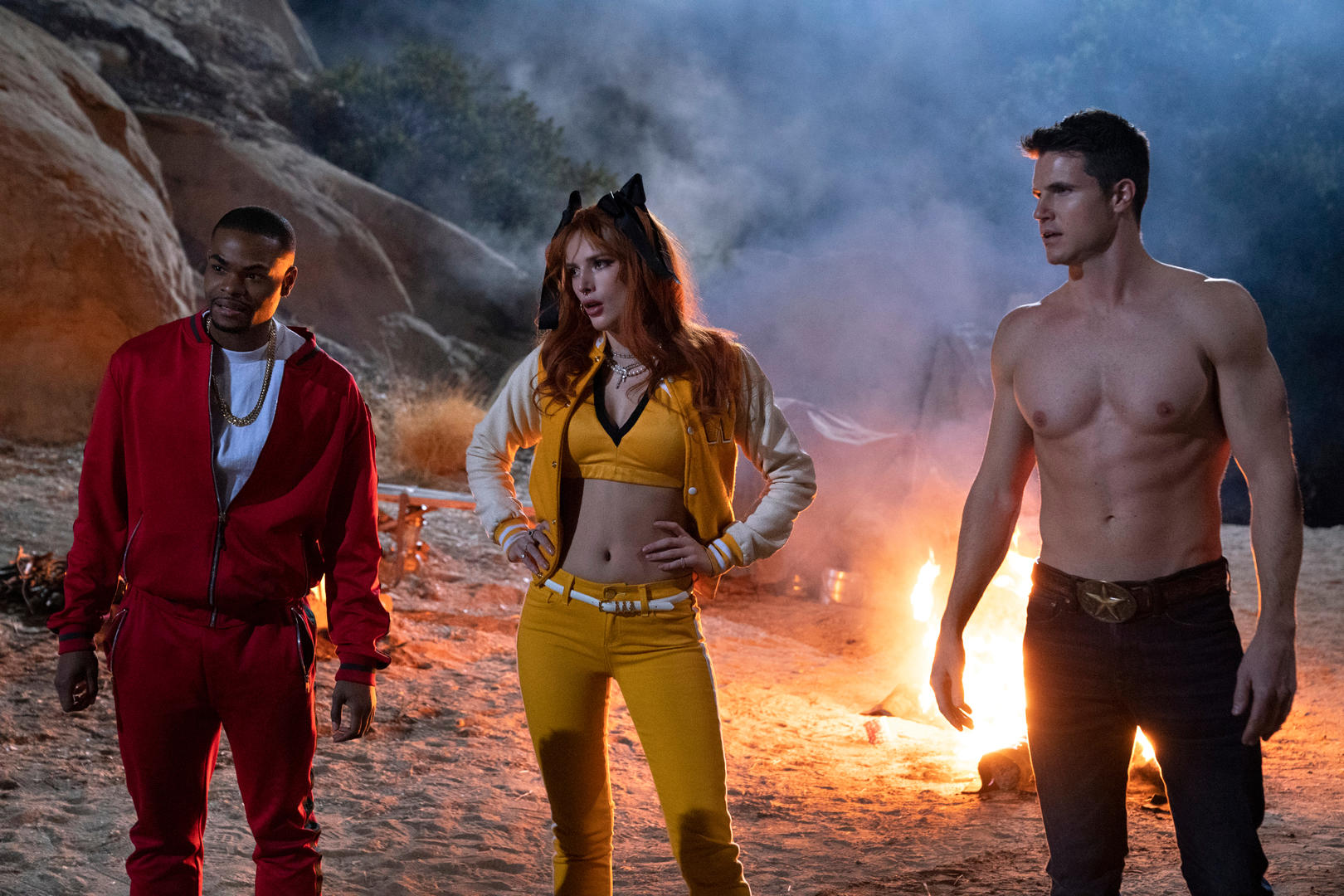
My Thoughts on The Babysitter: Killer Queen

 Sequel 'The Babysitter: Killer Queen' Coming to Netflix in September!  [Images] - Bloody Disgusting

I suppose I should preface this by talking about how I felt about the first Babysitter movie, and cards on the table, it didn't do anything for me. Not at first, anyway. No, my initial viewing of the film was marred by what I can only assume was an aversion to fun, and so when I revisited the film a few months ago, I was overjoyed to discover that I was very, very wrong. The Babysitter is a real blast, genre-savvy and over-the-top stylised, held together by an ace Samara Weaving performance. It knows what it is and it works within its style and genre to become something more than what it advertised, I'd recommend it wholeheartedly, especially as a gateway film for those looking to sink their teeth into the genre more. The news of a sequel didn't exactly fill me with confidence (despite the open ending), but having been converted into a fan by the first film's gory charms, I actually found myself looking forward to it. So how does The Babysitter: Killer Queen stack up to the surprise horror gem of 2017?

Spoiler alert: it doesn't. Not entirely anyway. I'll elaborate on why I found this so disappointing later, but for now, let's talk about the story. The plot once again follows Judah Lewis' Cole, recovering from what happened two years before in the way that only slasher protagonists do, which is to say that nobody believes him and everyone thinks he's crazy. Business as usual then, until an attempt to just be a normal teenager goes awry on a trip to the lake that once again sees him fight for his life against the same cult from the first film, now suspiciously more alive than when we last saw them. 

I'll say right now that this plot doesn't work at all. It takes a lot of contrivances and regularly defies its own logic, which is kind of a disappointment for a film where the hero learns that taking the easy way out is rarely the right thing to do. The big shocks are certainly effective but suffer from a serious inability to make any sense whatsoever. I'll keep the spoilers to a minimum so as not to get sacrificed myself, but the first big twist in this film just doesn't sit right with me. It makes for a thrilling, interesting plot, but it's hard to buy considering what the first film lay down. I can forgive it somewhat because as a catalyst it does make for an interesting story, but even still it's the first of many bizarre leaps in logic that the film makes

Of course the big twist won't be spoiled here. No, not the one that's in the trailer for some reason, but what comes after that. What I will say is that it's one of the most ham-fisted reveals in recent memory. Not only does it completely undermine this film, it kind of spoils the first one, too. For as much fun as this film is, ultimately it just isn't a satisfying story at all, completely and surprisingly undoing itself in a climax that feels like it's being written on the spot

Not that it's all bad either. They certainly had more fun with the gore this time around, because the kills in Babysitter 2 are insane. Creative, well-executed and oftentimes hilarious, the ways that characters are offed ends up becoming the film's saving grace. Speaking of the jokes, it's also really funny. Not as funny as the first film, and definitely not as charming, but the jokes aren't bad here at all. They don't do much to save the film, but they at least make it fun. And speaking of fun, the cast are by far the best thing about this movie, and it's clear that everyone involved had an absolute blast, which turns out to be infectious 

Newcomer Jenna Ortega is probably the MVP here, taking to the film's ultra-specific tone with absolute ease. My favourite of the old guard is still Robbie Amell, going full-douchebag once more and actually outdoing himself this time around. Apart from that, there aren't too many standouts. Yeah, I said the cast are the best thing here, but they mainly just ensure that the experience is fun and the tone is consistent, which it definitely is. They're solid across the board, and apart from the two I mentioned, none of them really outdo any of the others

So no, The Babysitter: Killer Queen is not a great film, on its own or as a sequel. It's not unwatchable, and given my history with the first one I could benefit from trying it again, but fun as it is it just doesn't hold up to any sort of scrutiny. It lacks the kind of internal logic that kept the original afloat, so it just feels kind of makeshift, employing any story beat kind of on the spot in its rush towards its messy (on every level) climax. So yeah, it gives me no pleasure to say it's a damp squib, although, who knows? Maybe in another three years I'll change my mind

★ ★